Learn more
A Short Guide to Poker Chips
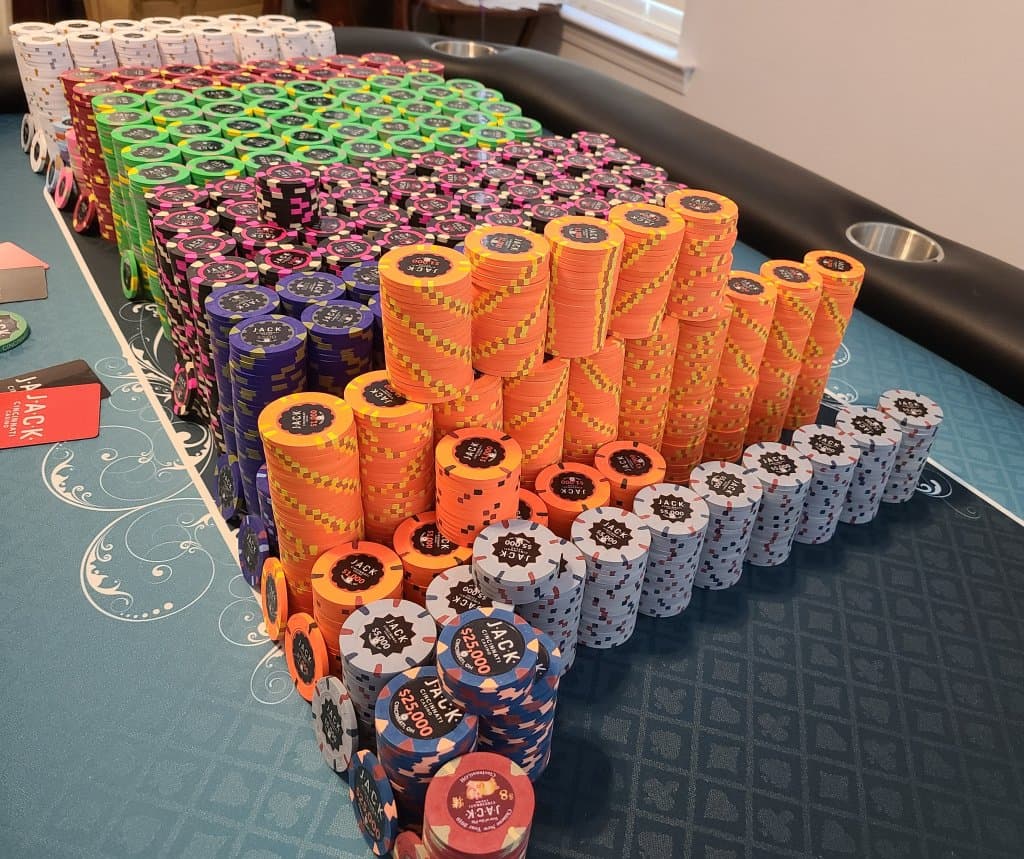
This is meant to be a simple guide to poker chips: the main types, what they’re made of, common misconceptions in chip marketing, chip weights, manufacturing methods, and more.
Read this if you want to impress your friends at the next poker game, or gently break the news to your friend who proudly bought a “100% clay” poker set that it probably isn’t really clay after all.
There are many different types of poker chips and materials, but in this guide we’ll focus on three main categories:
- Common mass-produced home-game chips
- Casino-grade chips
- High Score Chips
What Are Poker Chips Actually Made Of?
One of the biggest misconceptions in the poker-chip world is that chips are simply made out of “clay,” and that clay automatically means higher quality.
If you search online for poker chips, you’ll find countless sets advertised as “100% clay chips.” In reality, that is often more of a marketing term than a literal description.
No practical poker chip is made from 100% clay. Pure fired clay would be far too brittle for something that gets shuffled, stacked, dropped, and handled repeatedly.
Instead, poker chips are generally made from a composite mixture of materials. Depending on the manufacturer and type of chip, that mixture can include materials such as clay, chalk, calcium carbonate, mineral fillers, resins, and polymers.
The proportions can be adjusted depending on the feel and durability the manufacturer is trying to achieve.
Generally speaking, a softer composite can create the feel and sound associated with traditional casino chips, but it may wear down faster. A harder, more plastic-heavy composition can be considerably more durable, although it will usually feel and sound different.
That brings us to the three main types.
“Walmart Chips”
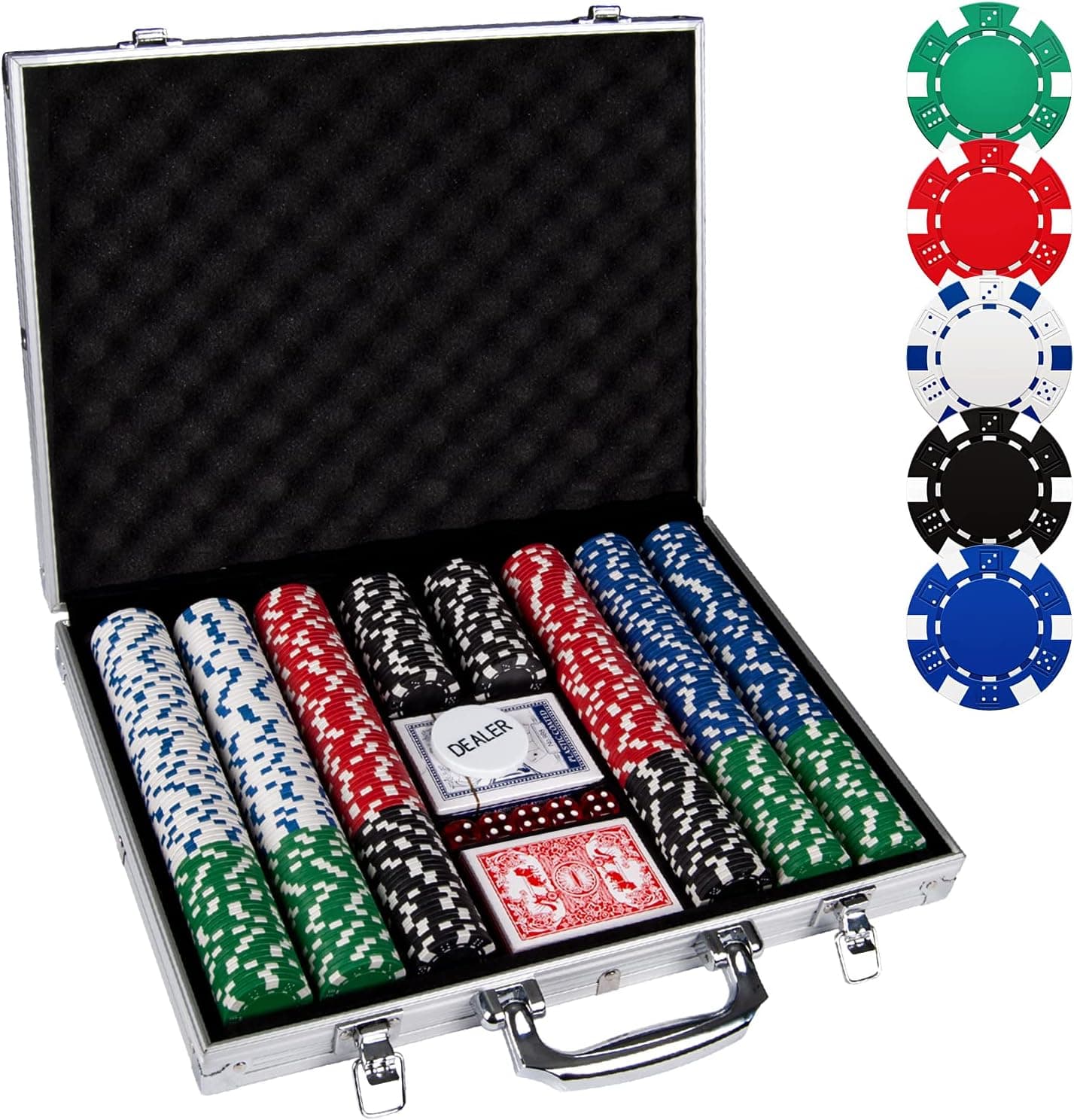
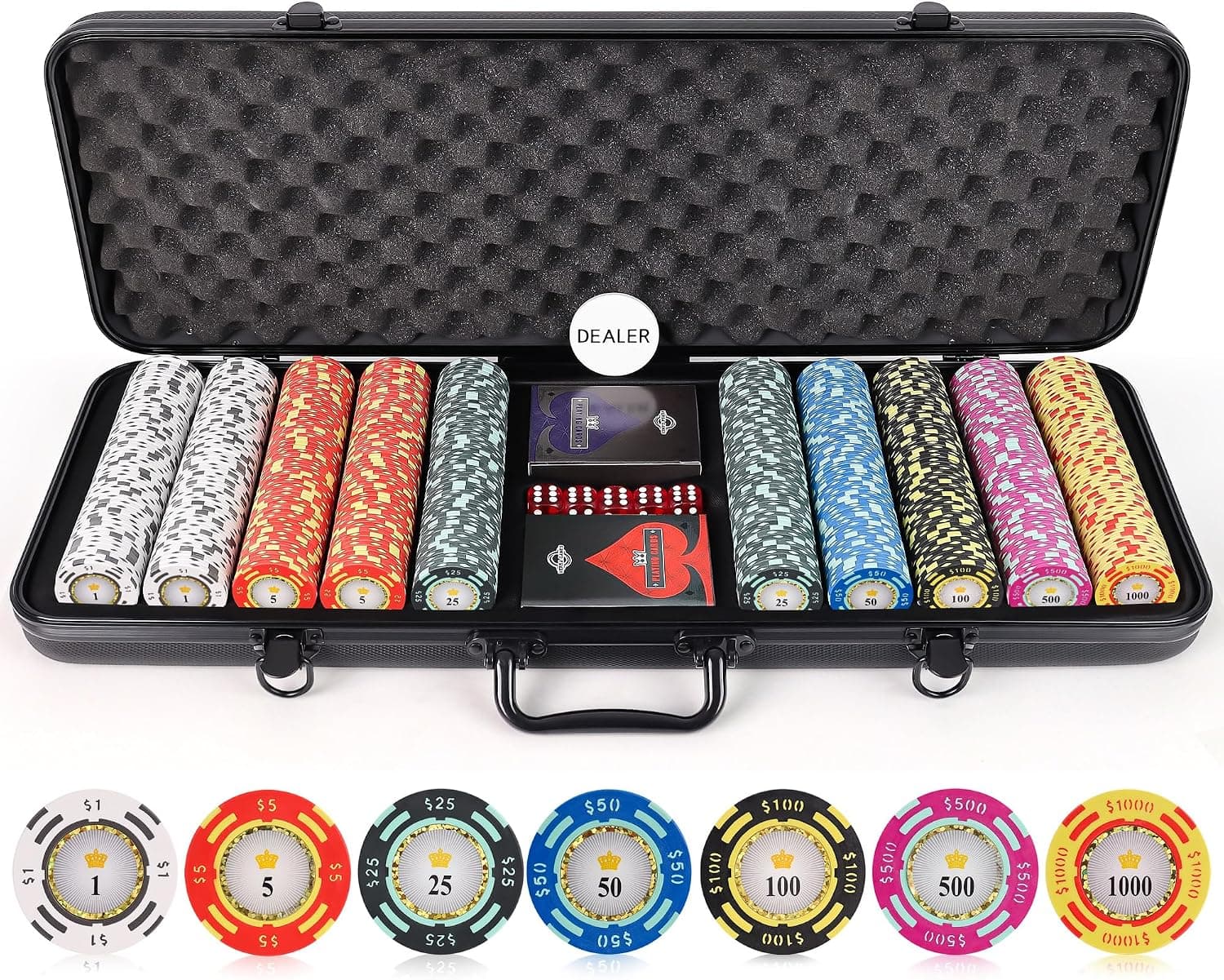
These are the chips you’ll commonly see in department stores, inexpensive poker sets, and all over the internet. They typically weigh around 11.5 grams and are often advertised as “100% clay”.
In reality, many of these chips are mass-produced and made primarily from harder, plastic-based materials.
They usually come in a variety of colors and printed designs, but underneath, many are essentially variations of the same basic mass-produced chip.
They are generally:
- inexpensive
- durable
- widely available
- not customizable
- uniform in design
For most casual poker players, there is absolutely nothing wrong with them. They get the job done, and they can last for years.
Casino-Grade Chips
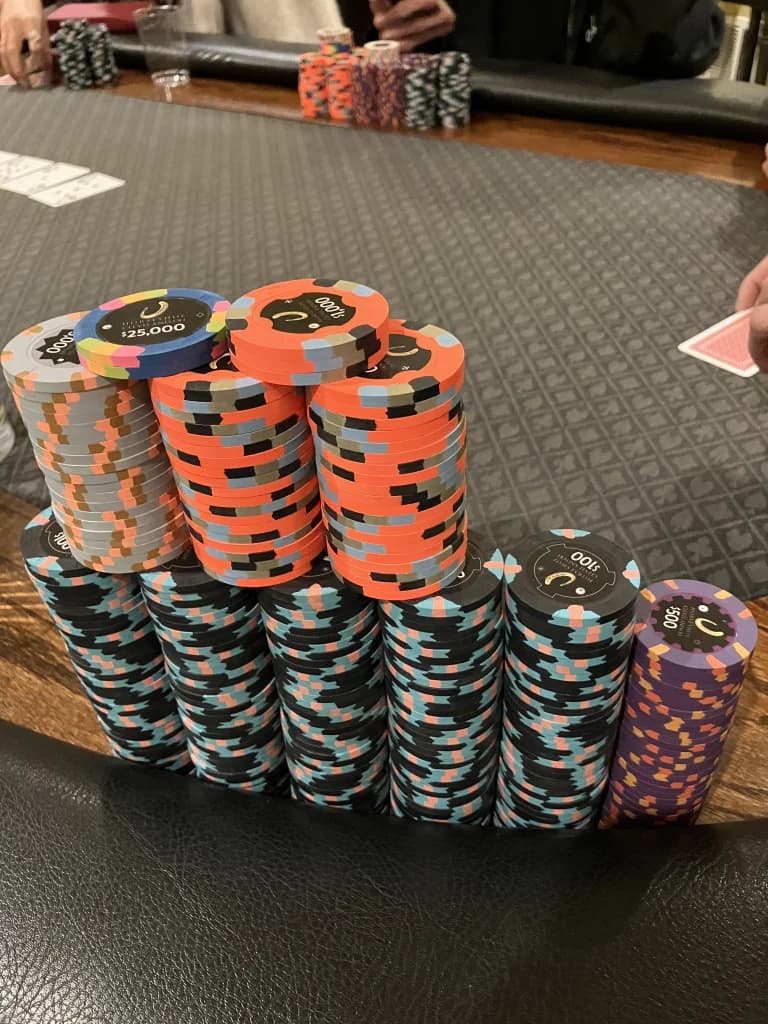

At the other end of the spectrum are the chips used by casinos and card rooms.
There are several manufacturers that produce chips for casinos, but one of the most famous names among poker players and collectors is Paulson.
Paulson chips have been used extensively in casinos throughout the United States and are especially common in Las Vegas. Unlike normal retail poker chips, Paulson primarily sells directly to licensed casinos and card rooms, meaning individuals generally cannot simply order a custom set directly from them.
Casino-grade compression-molded chips typically use a softer composite than inexpensive plastic-heavy chips. This gives them the distinctive texture, feel, and sound that many poker players immediately associate with real casino chips.
They commonly weigh around 9 to 10 grams, with many around 9.5 grams.
This surprises a lot of people because inexpensive poker sets are often marketed as “casino weight” simply because they weigh 11.5 grams or more.
In reality:
- Heavier does not necessarily mean higher quality.
- Many real casino chips are lighter than inexpensive home-game chips.
The tradeoff is durability. Because casino chips use a softer material, years of heavy use can gradually wear them down. Their edges become rounded, and small nicks or imperfections can eventually appear around the edges. Collectors sometimes refer to these tiny edge nicks as “flea bites.”
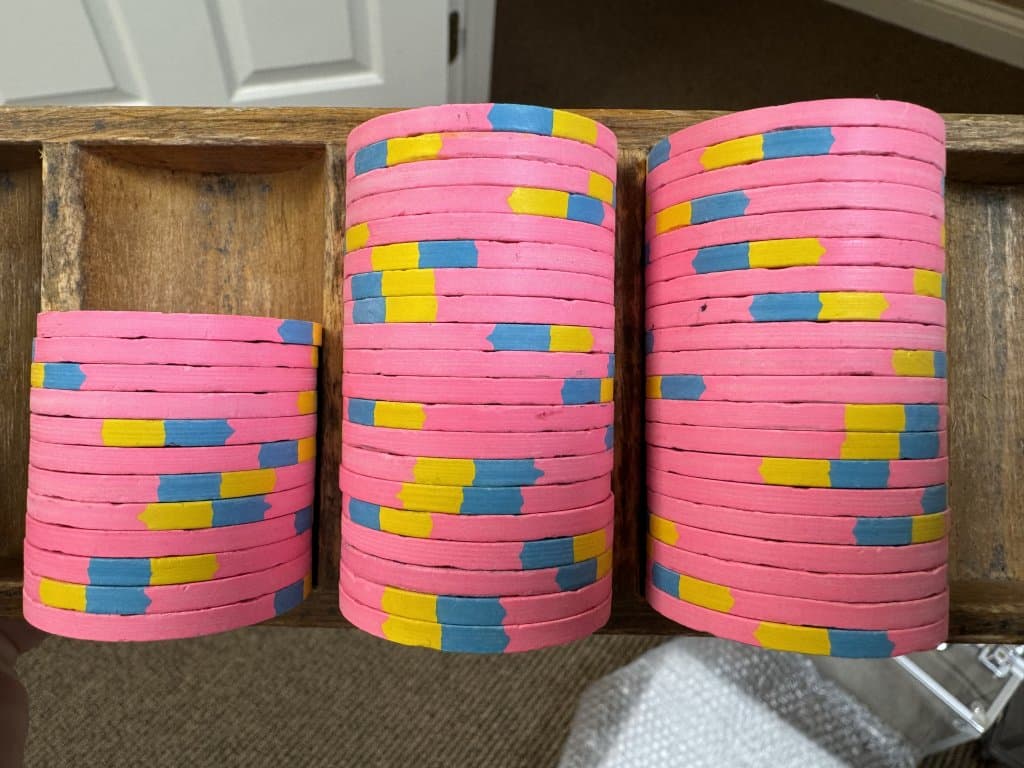
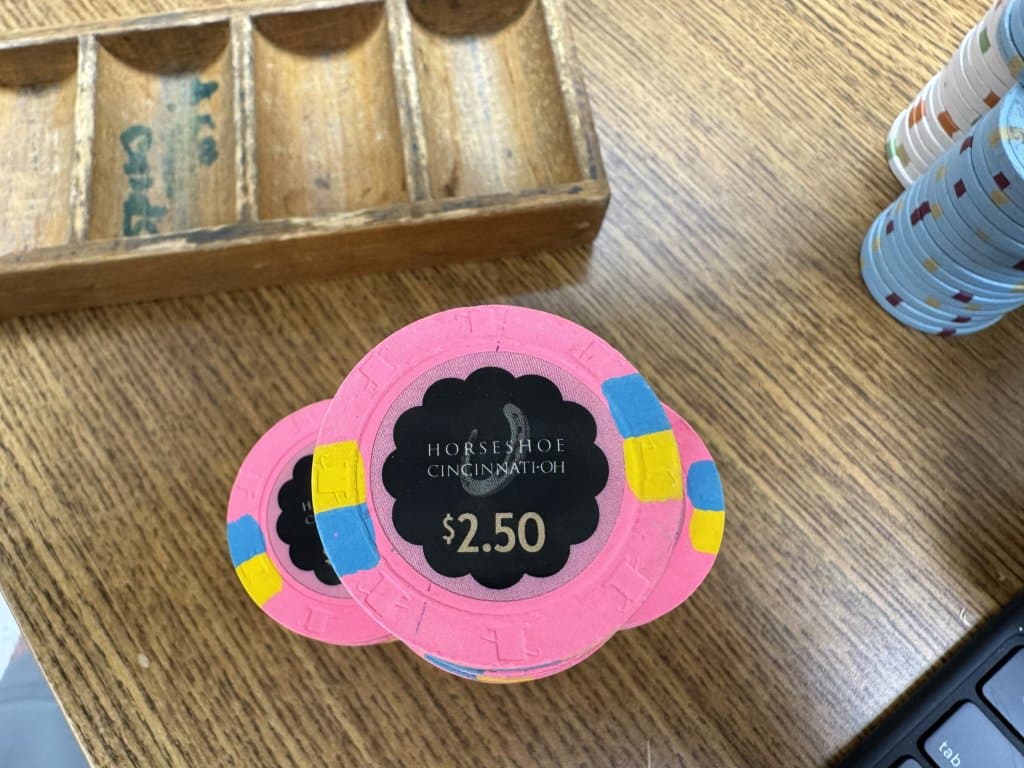
Casinos therefore periodically remove heavily worn chips from circulation and replace them.
Casino chips can also be surprisingly expensive to manufacture. Depending on the security features, design complexity, quantity ordered, and manufacturer, a casino may spend several dollars per chip.
So yes — it is entirely possible for a casino to spend $4–$6 producing a $1 chip.
Of course, that does not mean the casino loses money every time somebody uses it. The same chip can circulate thousands of times over many years.
How Casino Chips Are Made
Traditional casino-style chips are commonly produced using a process called compression molding.
A measured amount of chip material is placed into a heated mold and compressed under significant pressure. The heat and pressure form the material into the final shape of the chip.
Once the material has properly formed and cooled, the finished chips are removed from the mold.
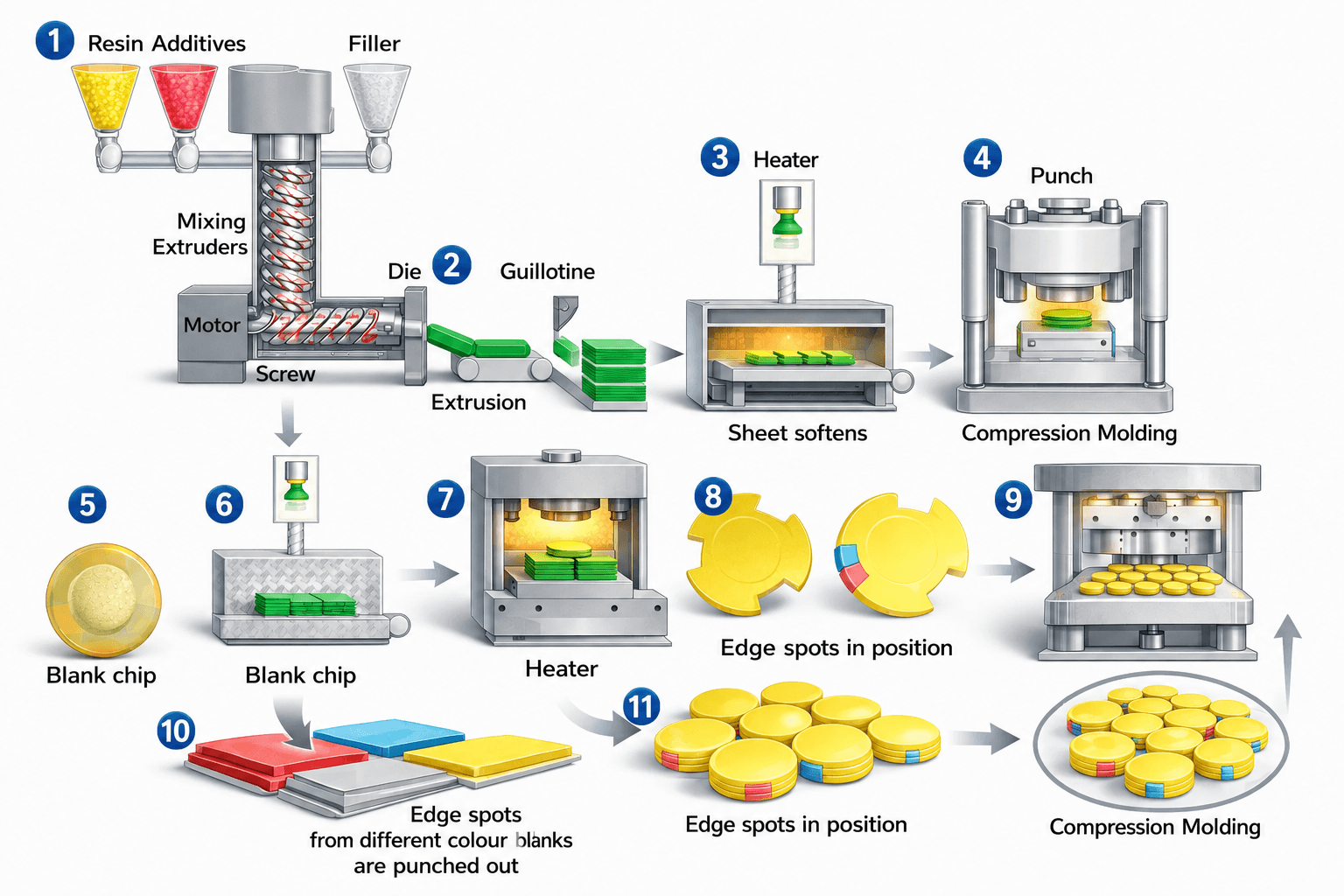
Casino chips are also particularly beautiful because casinos usually give each denomination its own combination of colors, edge spots, inserts, and artwork.
Over time, these designs become closely associated with the casino itself.
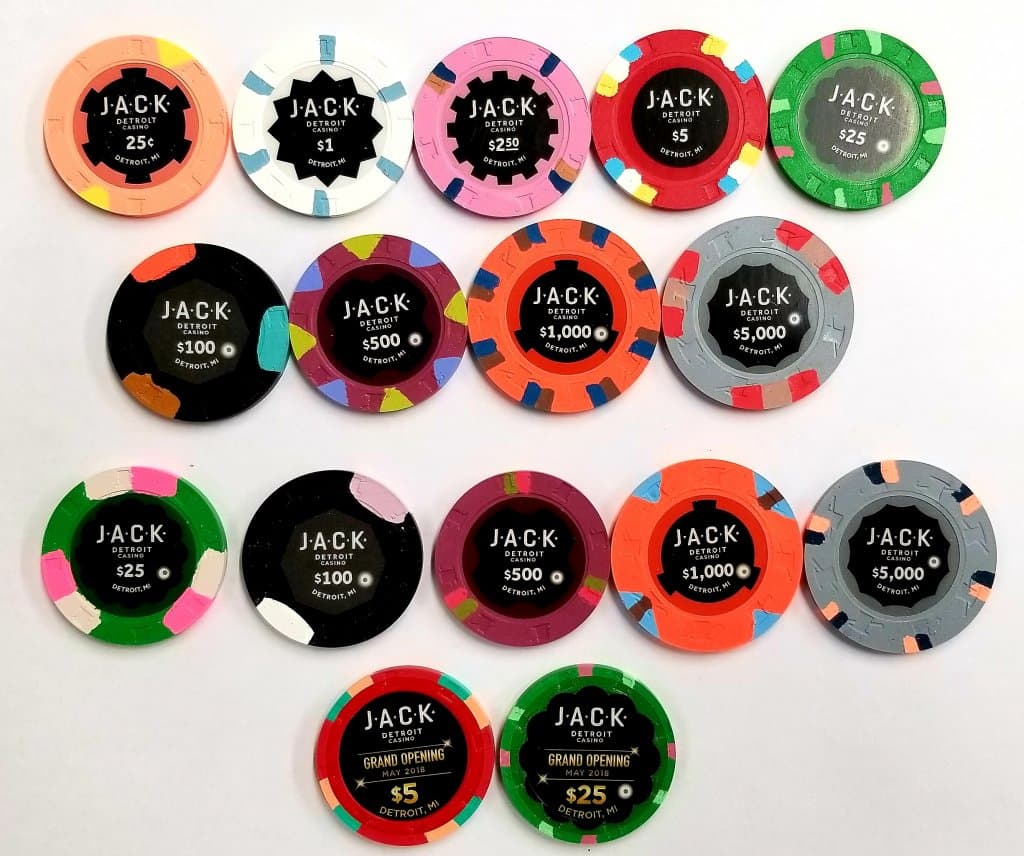
For poker players and collectors, a single chip can become a miniature souvenir from a particular casino, poker room, or trip to Las Vegas.
Casino Chip Colors
Poker-chip colors are largely standardized across the industry, and in many jurisdictions the common denominations are set by gaming regulations.
Although casinos can use different combinations, you will commonly see:
- $1 chips
- white or blue
- $5 chips
- red
- $25 chips
- green
- $100 chips
- black
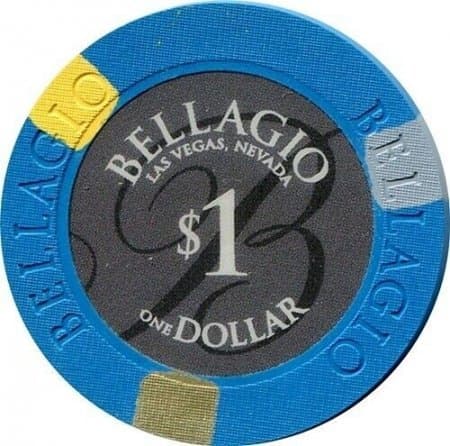
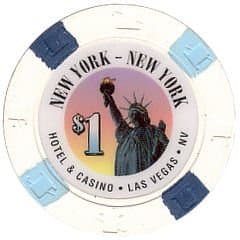
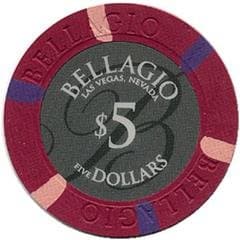
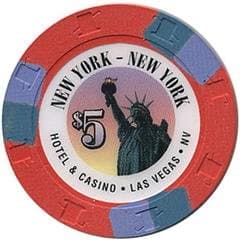
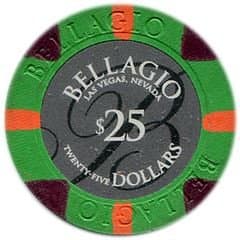
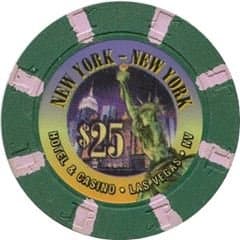
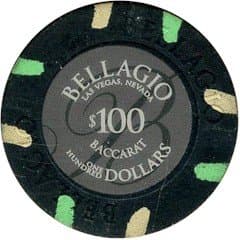
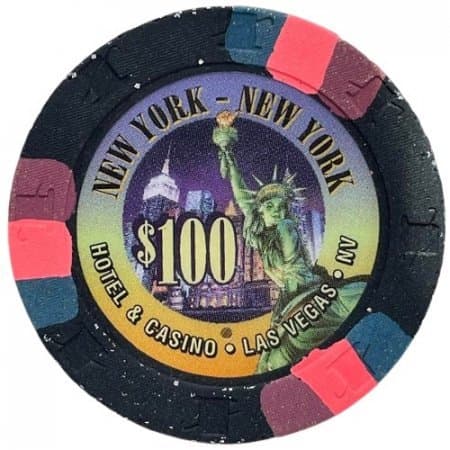
Other denominations can vary significantly between casinos.
High Score Chips
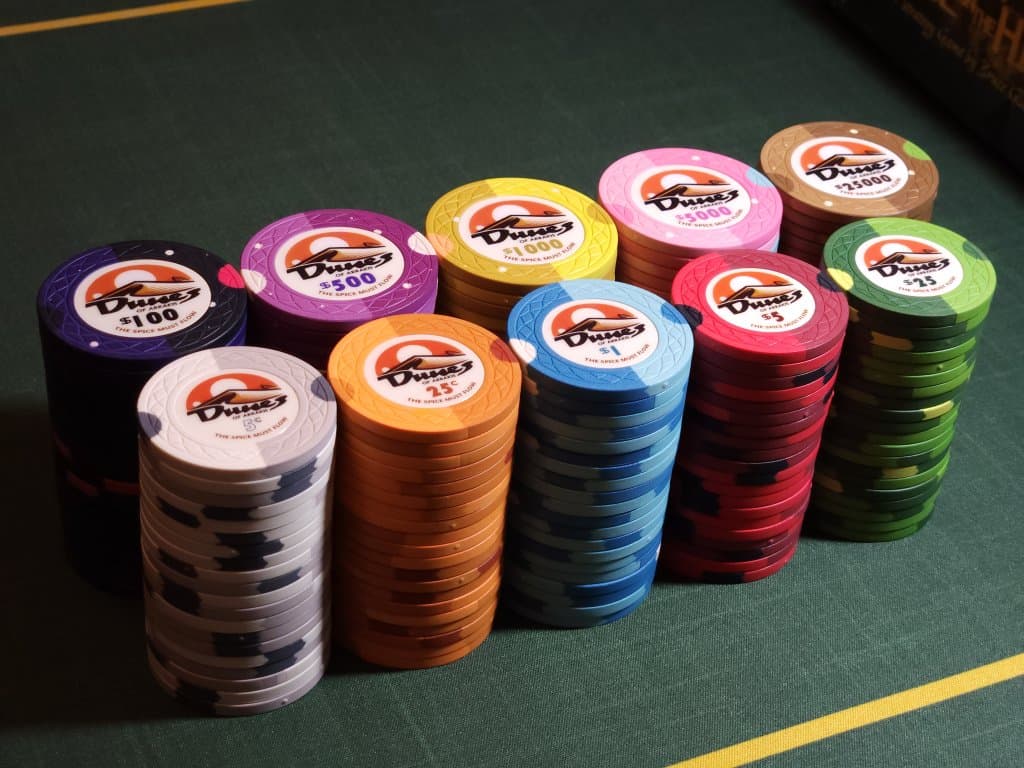
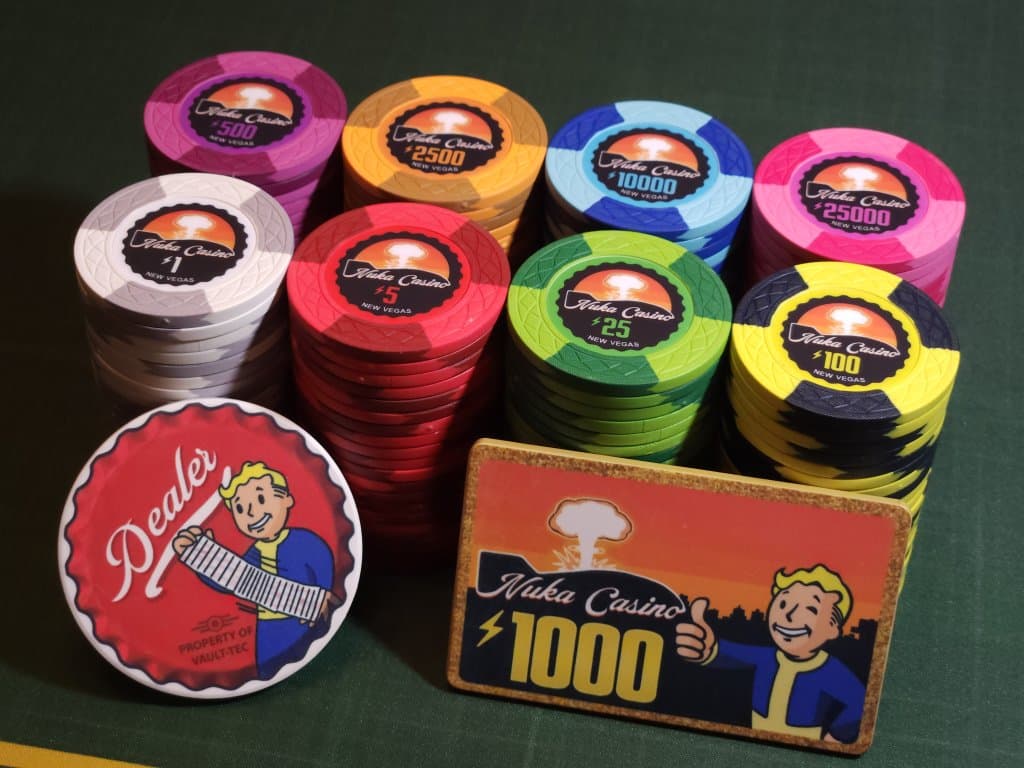
Our chips were designed with the goal of combining some of our favorite characteristics of casino-grade chips with something traditional casino chips generally cannot offer consumers:
complete customization at a much more accessible price.
Color and design are limited on both mass-produced store chips and casino-grade chips: a cheap store set comes in a small range of stock colors, and a casino commits to one fixed design per denomination. Every High Score Chips set is made to order, so any color, any edge-spot combination, and any center design is possible.
Our chips weigh approximately 9.5 grams, similar to many casino chips, and use the same general dimensions as standard casino poker chips.
If you stack a High Score Chip alongside a typical casino chip, the diameter and thickness are designed to feel familiar and consistent.
Our chip composition is slightly harder and more durability-focused than the softer composites traditionally used in many casino chips.
That makes High Score Chips more resistant to the gradual edge wear commonly seen on heavily used casino chips.
They are not indestructible, of course. Repeatedly dropping any poker chip onto concrete, tile, or another very hard surface can cause damage.
But under normal home-game conditions and with reasonable care, a High Score Chips set can last for many years.
How High Score Chips Are Made
High Score Chips are manufactured using an injection-molding process.
Instead of placing the chip material into a mold and compressing it under pressure, the heated material is injected directly into the mold.
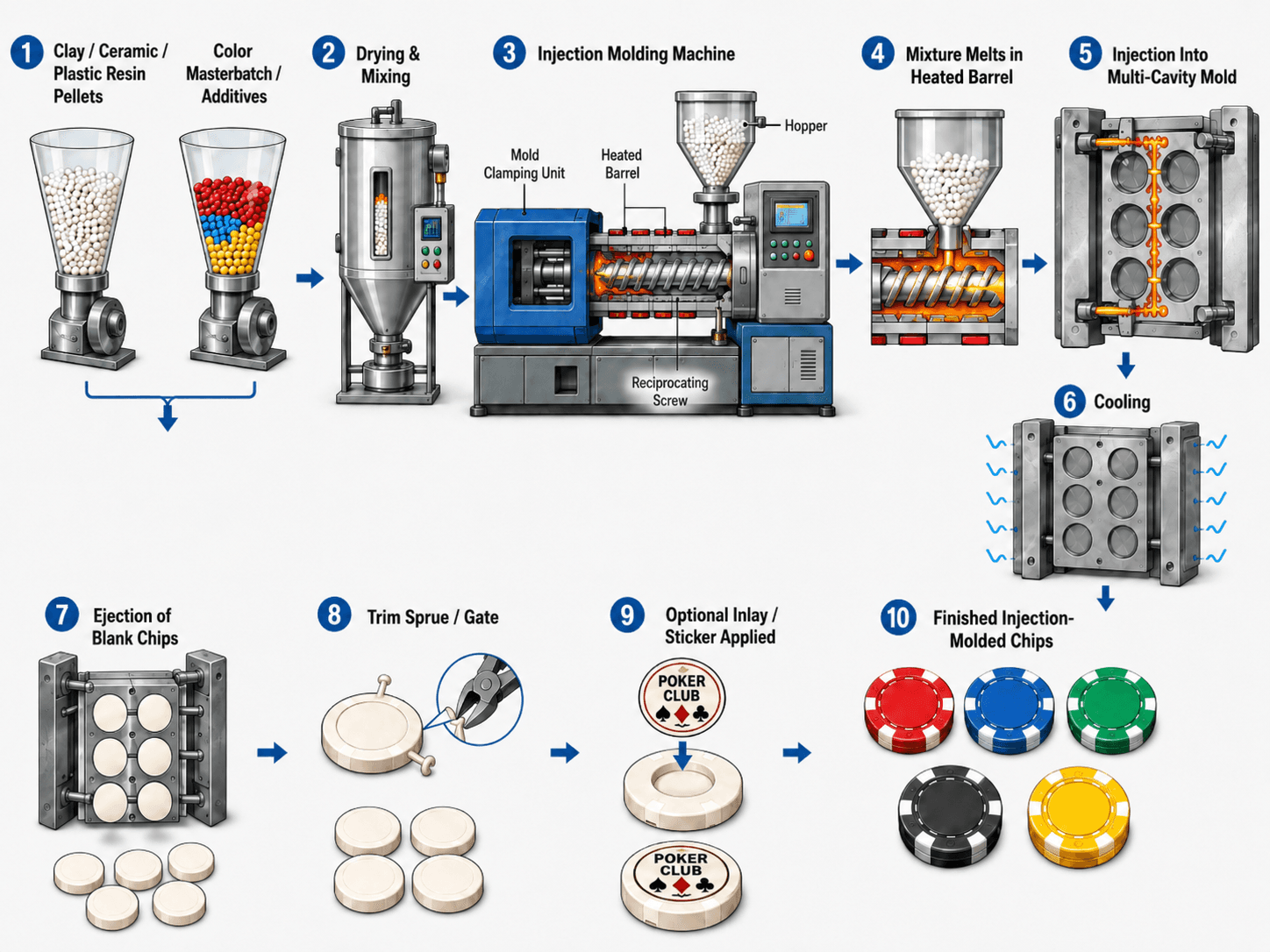
One characteristic of injection molding is that it can leave a very small injection point on the edge of the chip where the material entered the mold.

The advantage of this manufacturing process is consistency.
Injection molding allows us to produce chips with very consistent dimensions while also giving us considerably more flexibility when it comes to:
- chip colors
- edge-spot combinations
- molds
- artwork
- logos
- custom designs
That customization is really what separates High Score Chips from the mass-produced chips you typically find in stores.
Instead of simply choosing from a handful of predetermined colors and designs, you can build a set around your own poker room, group of friends, favorite theme, business, family, inside joke, or completely original idea.
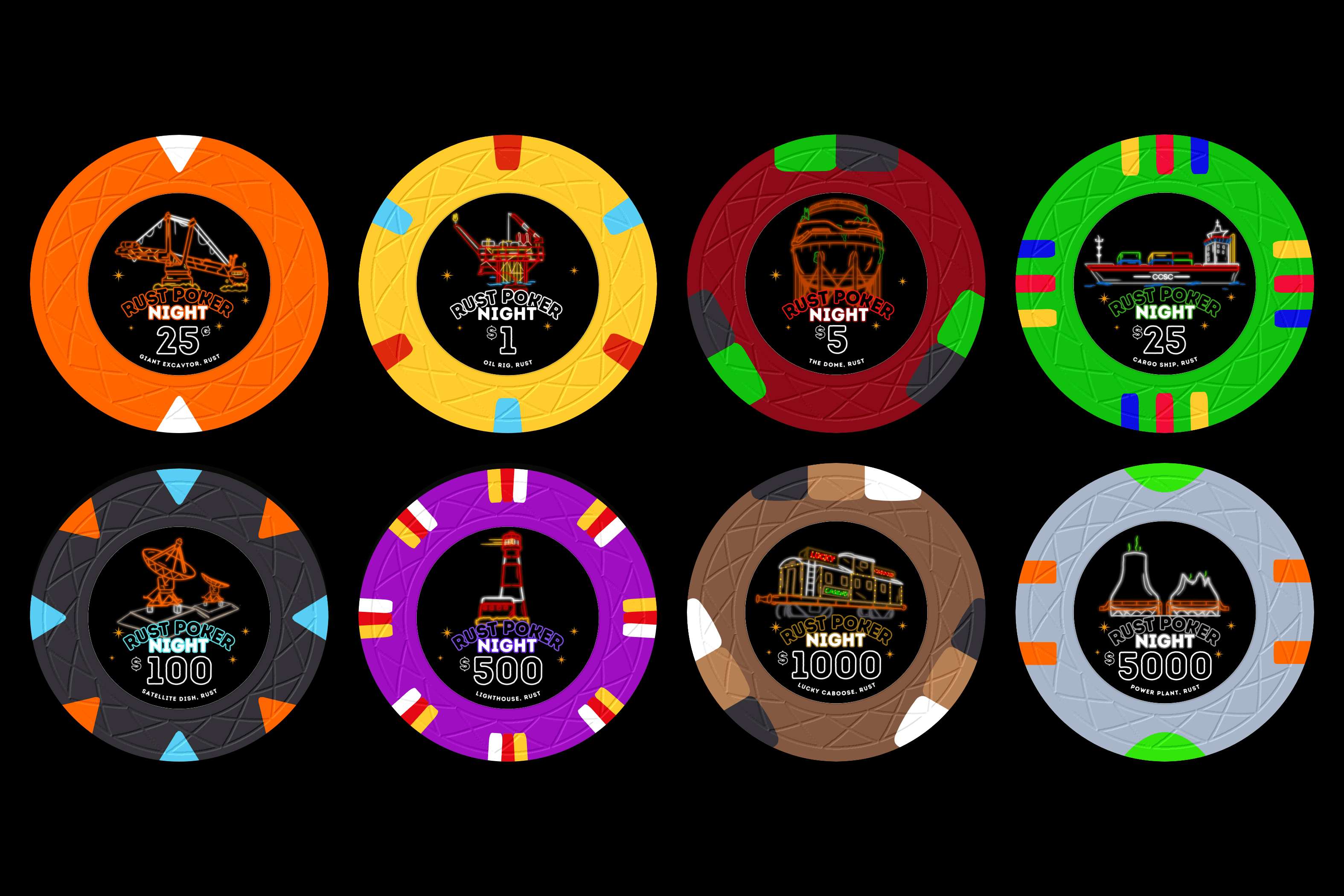
Our goal is to take the proportions, weight, feel, and visual appeal that people love about casino chips and combine them with a level of customization that would normally be extremely difficult or expensive to achieve.
That is what High Score Chips is all about.